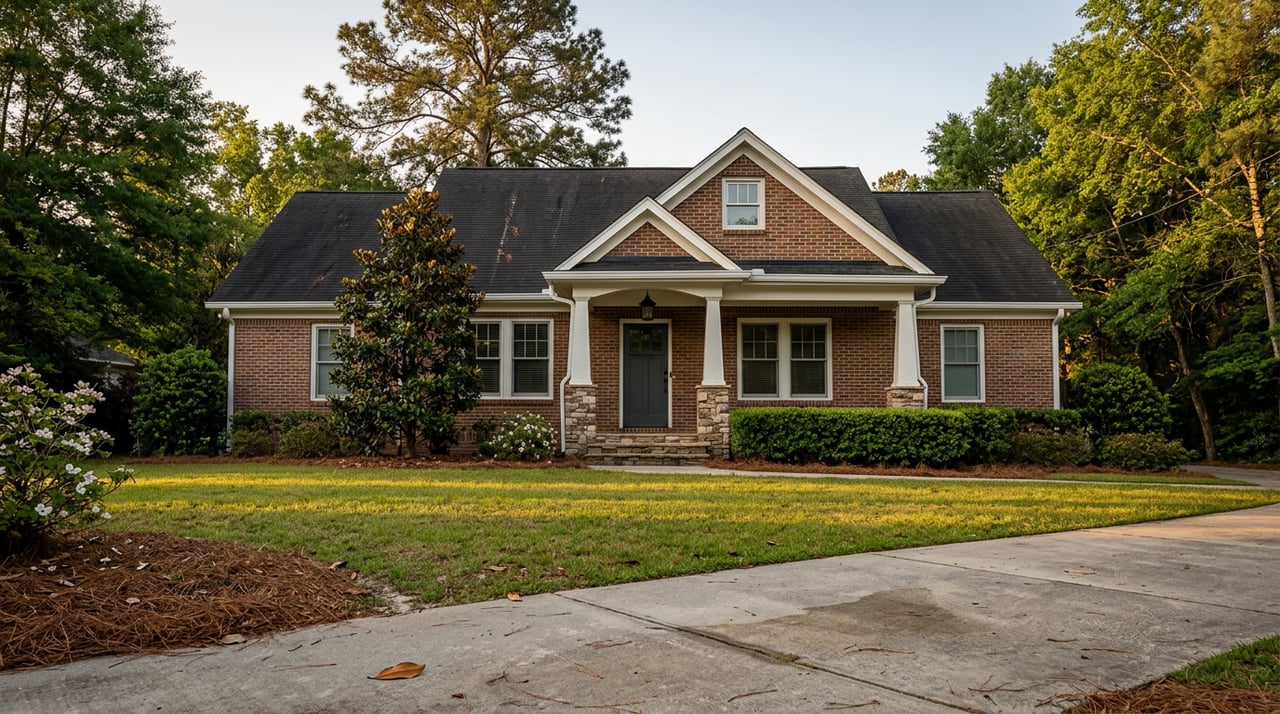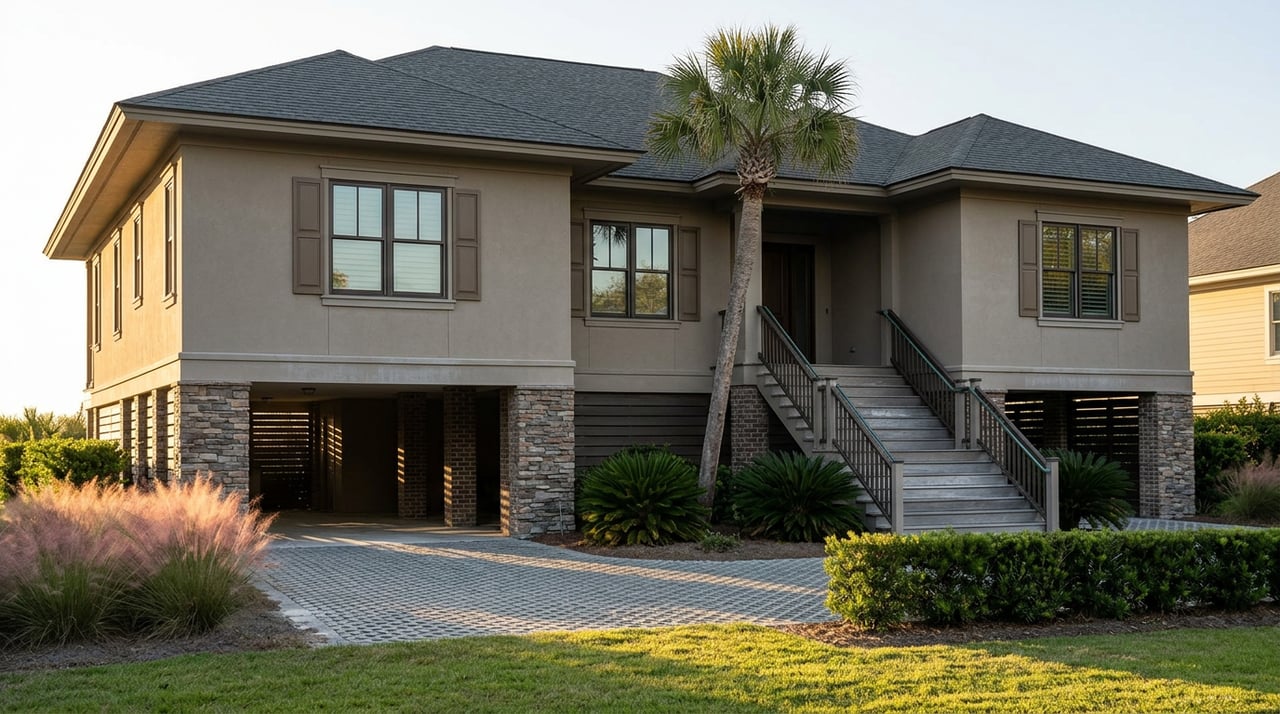
Why does an entry-level place on Pensacola Beach run in the $300s while a comparable unit down the Panhandle coast in Panama City Beach lists closer to $400,000? Most buyers assume it's just Pensacola being the quieter, less discovered cousin. That's part of it. But the bigger reason sits three lines down in the listing, in a word a lot of shoppers skim right past: leasehold.
On Pensacola Beach, you are almost never buying land. You're buying a building, plus a long-term lease on the ground underneath it, administered by a public agency that is, right now, in the middle of rewriting two of the rules that determine what that lease is worth. If you're comparing neighborhoods on the Emerald Coast and Pensacola Beach's price point caught your eye, the number only makes sense once you understand what it's actually pricing in.
You're Not Buying the Sand
Santa Rosa Island, the barrier island that holds Pensacola Beach, is owned by Escambia County. The Florida Legislature created the Santa Rosa Island Authority in 1947 to manage it, and two years later lawmakers authorized the agency to write ninety-nine-year leases for residential construction. That structure never went away. Roughly 1,474 acres make up Pensacola Beach, and about 40 percent of it is leased out for private residential and commercial use, with the rest held as public land. When you close on a home or condo here, you're taking over a leasehold interest in a parcel, not fee-simple title to it.
That distinction is why financing gets more complicated than it does on a standard mainland purchase. Leasehold mortgages in Florida generally carry a rate premium and a lower loan-to-value ceiling than fee-simple loans, because the lender's collateral is a lease rather than land it can fully claim if something goes wrong. Not every lender wants that risk, and the ones who do underwrite it differently than a conventional loan. If you're shopping Pensacola Beach alongside a fee-simple mainland neighborhood like Gulf Breeze, get pre-qualified specifically for a leasehold property before you fall for a listing. Worth knowing too: Navarre Beach sits on the same barrier island and runs its own long-term leasehold system, just administered by Santa Rosa County instead of SRIA, so it isn't the fee-simple alternative it might look like from a portal search either. Some lenders simply won't touch it, and finding out after you're under contract is the friction point that catches buyers off guard most often.
Then there's the annual lease fee itself, paid to SRIA on top of whatever you'd normally budget for a mortgage and insurance. It doesn't replace property tax on the land the way a full fee-simple bill would, but it isn't nothing either, and it's part of the math that narrows the gap between Pensacola Beach's lower sticker price and what a fee-simple property elsewhere actually costs you monthly.
| Fee Simple (Gulf Breeze, mainland) | Leasehold (Pensacola Beach) | |
|---|---|---|
| Land ownership | You own it | County owns it, SRIA administers it |
| Typical financing | Standard mortgage terms | Fewer lenders, lower LTV, rate premium |
| Recurring land cost | Property tax | Annual SRIA lease fee |
| Term | Indefinite | Ninety-nine years, renewable |
The Renewal Fight That's Happening Right Now
Here's the part a generic leasehold explainer from a year ago wouldn't tell you, because it wasn't happening yet. At its January 28, 2026 meeting, the SRIA board found itself wrestling with a question nobody had fully settled: how many times can a leaseholder renew a ninety-nine-year lease?
Two leaseholders, Steve and Martha Luppert, had just renewed their lease to run until April 30, 2155, and came back asking for another extension to 2254. Board attorney Mary Jane Bass told the board that a lease already renewed once wasn't ripe for a second renewal. Board member Bruce Childers pushed for a firmer rule going forward, one 99-year lease and only one, arguing it would "clear up a lot of confusion." Fellow board member Jeremy Johnson agreed a policy was overdue but wanted a different approach. Staff was directed to start drafting one.
For a buyer, this matters more than it sounds. If you're looking at a specific address on Pensacola Beach, the lease attached to it might have decades left, might have already been renewed once, and might be renewable again, or might not, depending on a policy the board hadn't finished writing as of early this year. That's not a detail you can shrug off as boilerplate. It's specific to the parcel, and it's worth asking your agent to pull the actual SRIA lease number and status before you get attached to a property.
It also helps to understand why the county has little appetite to walk away from this system. Lease fee collections for November 2025 alone totaled $449,787, a 71 percent increase over the same month in 2024, money that funds beach fire-rescue services directly. The leasehold model isn't a relic anyone's quietly phasing out. It's a growing revenue line the county depends on, which is one reason talk of converting the island to private fee-simple ownership has never gone anywhere. A Santa Rosa County commissioner floated a private-ownership push back in 2003, and Escambia County commissioners on the other side of the county line pushed back hard, unwilling to give up land they viewed as belonging to county taxpayers. That standoff hasn't really changed.
The Second Live Fight: A Short-Term Rental Registry
If part of your interest in Pensacola Beach is rental income, there's a second 2026 development you need on your radar. On August 20, the SRIA Short-Term Rental Committee, made up of board members Marc Marrocco, David Peaden, and Jerry Watson, unanimously directed staff and legal counsel to draft a registry policy for rentals on the island. The framework leans heavily on Panama City Beach's ordinance, which the committee cited as having real enforcement teeth, along with pieces borrowed from Gulf Breeze and Anna Maria Island. New SRIA attorney Heather Maxwell is working on the draft alongside retiring attorney Mary Jane Bass.
The complaints driving this aren't abstract. Rhonda Dorfman, president of Pensacola Beach Advocates and a full-time island resident, told reporters the problem isn't ordinary beach-trip families. It's houses that "sleep 30 or 40 people," she said, generating parking and trash pressure the neighborhood wasn't built to absorb. At the same meeting, longtime resident Pam Craighead pushed for stronger enforcement, arguing that anyone who doesn't live on the island full time has no idea how bad weekend turnover gets.
The committee's recommendation went to the full SRIA board on August 26, with a follow-up meeting scheduled for September 23. As of this writing, the policy hasn't been finalized, and SRIA's own attorney has cautioned that some enforcement power over noise and parking sits with Escambia County, not the island authority itself, so the final version may end up as two overlapping layers of rules rather than one clean ordinance. If short-term rental income is part of your investment plan, that's a moving target worth tracking before you close, not after.
What This Means If You're Comparing Neighborhoods
Run the full comparison and the picture on Pensacola Beach looks different than the listing price alone suggests. You're getting a lower entry point than a fee-simple market like Panama City Beach, but you're paying for it in financing friction, an annual lease fee, a renewal policy that's still being written, and now a rental compliance layer that isn't finished either. None of that makes Pensacola Beach a bad buy. Plenty of owners have built decades of equity and rental income here without issue, and the SRIA board's own track record shows it renews leases far more often than it declines them. But the math only works if you go in knowing what you're actually buying, not what a portal search implies.
Before you write an offer on Pensacola Beach:
- Ask for the specific SRIA lease number attached to the property and confirm the actual expiration date, not just the general "99-year lease" label.
- Ask whether that lease has already been renewed once. The board's current push toward a one-renewal cap could limit how many more extensions are available.
- Get pre-qualified with a lender who explicitly writes leasehold mortgages for the island. Terms and approval odds differ from a standard fee-simple loan.
- If rental income is part of your plan, follow the SRIA board's calendar through the September 23 meeting before locking in your investment numbers.
A Few Quick Answers
Can I ever buy the land outright on Pensacola Beach? Not under the current structure. The federal restrictions that shaped the original 1947 arrangement, combined with Escambia County's ongoing reliance on lease fee revenue, mean fee-simple conversion has been proposed before and gone nowhere.
What happens when a 99-year lease actually runs out? In practice, SRIA has consistently approved renewal requests, sometimes decades before a lease's original term even ends. The open question right now isn't whether renewals happen, it's how many times a single lease can be renewed under whatever policy the board finalizes.
Does the leasehold structure hurt resale value? It can narrow your buyer pool, since not every purchaser wants to deal with leasehold financing. That's exactly why knowing your specific lease's remaining term and renewal history matters as much for your exit as it did for your purchase.
If you're weighing Pensacola Beach against Navarre Beach, Gulf Breeze, or another Emerald Coast neighborhood, the details above are the ones that actually move your numbers. Coastal Collective Group can walk through a specific SRIA lease, connect you with lenders who write leasehold financing regularly, and keep you posted as the board finalizes its rental policy. Schedule a Free Consultation and we'll get you the real picture before you write an offer.