Wondering how to sell a historic home in Pensacola without flattening what makes it special? You are not just selling bedrooms, baths, and square footage. You are selling craftsmanship, context, and a piece of local history. When you present that story clearly and back it up with the right documentation, you can help buyers see both the charm and the day-to-day livability. Let’s dive in.
Why historic homes sell differently
Pensacola has a long preservation history, and that shapes how historic homes are bought, sold, and updated. The City of Pensacola identifies the city as the first multiyear European settlement in the United States and notes that it established its first preservation ordinance and district boundaries in 1968.
That local preservation framework means your home may be understood through more than one lens. Buyers may look at architecture, period details, neighborhood context, and whether the property sits in a locally recognized historic area such as the Pensacola Historic District, North Hill, Old East Hill, or the Palafox Historic Business District.
Each area has its own character. Old East Hill is largely residential and includes vernacular, Craftsman, Mission, and Queen Anne examples from roughly 1870 through the 1920s, while the Pensacola Historic District includes older and more varied forms such as French Creole cottages, Victorian, Greek Revival, and frame vernacular buildings.
Know your historic designation
One of the biggest points of confusion for buyers is historic status. If you can explain it simply and accurately, you reduce uncertainty early.
A home listed on the National Register is not the same as a home subject to local historic district review. National Register listing is formal recognition, but for a private owner it does not automatically restrict what you can do unless the property is involved in a federally assisted project.
In Pensacola, local historic districts are different because exterior work is reviewed through the city’s Architectural Review Board. That means a buyer may care less about honorary recognition and more about what local review applies to future exterior changes.
Lead with the home’s defining features
Historic homes tend to connect with buyers emotionally when the details are easy to see. That is especially important online, where many buyers begin their search and where listing photos often make the strongest first impression.
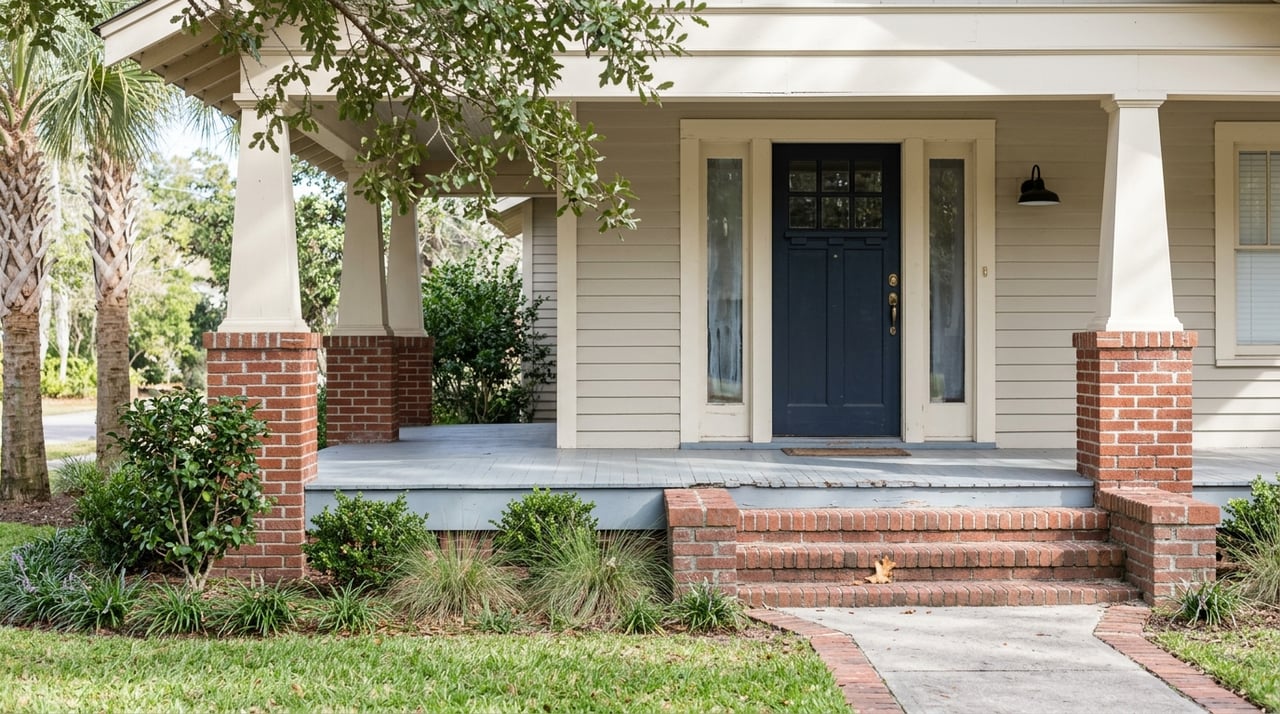
For a Pensacola historic home, your best features are often the elements that show age, craftsmanship, and authenticity. Think front porches, original trim, windows, doors, stair details, wood siding, and masonry.
Instead of treating those features like background texture, make them central to the presentation. Clear photography, video, and thoughtful captions can help buyers understand what is original, what has been restored, and what has been updated in a way that respects the home’s character.
Show repair choices with care
When buyers hear “historic home,” they often wonder what has been preserved and what has been changed. Your goal is to answer that before it becomes a concern.
A useful preservation standard is repair over replacement and compatibility over imitation. The Secretary of the Interior’s Standards for Rehabilitation emphasize keeping historic character, preserving distinctive features and craftsmanship, repairing deteriorated features when possible, and making changes compatible in scale, massing, and materials.
Pensacola’s local design guidance gets even more specific. The city says documented materials, styles, and construction methods should be duplicated when repairing or altering contributing structures, porches are required where an original porch existed, roof materials should match the original where possible, and vinyl or aluminum siding on contributing structures is generally considered inappropriate.
That matters when you prepare your home for market. If you have completed exterior work, buyers will feel more confident when they can see that repairs respected the home rather than erased what made it distinctive.
Build a seller documentation packet
A strong historic-home sale is often supported by paperwork as much as presentation. Buyers want the story, but they also want proof.
Before listing, gather a simple packet that includes:
- Permit history
- Dates of major repairs or improvements
- Photos of original features
- Photos of repaired or restored features
- Any Architectural Review Board approvals
- Notes on modern system updates
This packet helps answer the questions buyers ask most often. It also shows that you have cared for the property in an organized, transparent way.
Address city review upfront
In Pensacola’s historic zoning districts, exterior erection, construction, demolition, renovation, or alteration must be accompanied by drawings or sketches. The city also states that formal Architectural Review Board submissions must be complete 21 days before the meeting date.
That does not mean every seller needs a new review before listing. It does mean buyers may want clarity on whether past exterior work was reviewed when required and what records exist.
If you have completed exterior changes, be ready to explain what was done and whether approvals were obtained. If work is still being considered before listing, early comments through the city’s weekly One Stop Development Review meetings may help you avoid delays and make smarter prep decisions.
Market the story, not just the specs
Historic homes usually perform best when the marketing helps buyers picture the experience of living there. Charm is part of the value, but it needs to be translated into a clear, visual, useful listing.
That means your listing should do more than recite room counts. It should explain what daily life feels like, how original details shape the atmosphere, and how updates support modern routines.
Narrative-style descriptions are especially effective for this kind of property. Instead of saying only that a home has a porch or tall windows, show why those features matter. Describe morning light, architectural texture, gathering spaces, and the relationship between preserved details and comfortable living.
Use staging to support character
Historic homes should feel special, but they also need to feel livable. Buyers may love old-growth trim and original doors, yet still want to see how the home works for today.
Staging can help bridge that gap. According to NAR’s 2025 staging report, 29% of agents reported that staging increased the dollar value offered by 1% to 10%, and 49% said staging reduced time on market.
Focus first on the rooms buyers tend to notice most. Living rooms, primary bedrooms, and kitchens are especially important places to balance period character with a clean, welcoming, move-in-ready feel.
Balance authenticity and modern function
Many buyers are happy to pay for charm, but they still expect a home to function well. That is why your presentation should pair historic authenticity with practical updates.
If your home has improved systems, flexible rooms, energy-efficient upgrades, smart-home features, or usable outdoor areas, make those benefits easy to understand. Historic appeal may attract the buyer, but modern livability often helps close the gap between admiration and action.
The key is to present updates as supportive, not distracting. Buyers should see that the home’s story remains intact while daily life feels easier and more comfortable.
Price by neighborhood, not just citywide averages
Pricing a historic home in Pensacola takes nuance. A broad city average may offer context, but it should not be the main pricing tool for a home in a distinct historic area.
In February 2026, Realtor.com described Pensacola as a balanced market, with a median listing price near $310,000, homes selling at about 98% of list price, and a median of 61 days on market. That is useful background, but neighborhood-level figures point to very different price ranges.
For example, Redfin reported a median sale price of $698,000 in East Hill in March 2026 and $465,000 in Downtown Pensacola in March 2026. Because these figures come from different providers and metrics, they are best read as directional evidence, but they still reinforce an important point: historic neighborhoods can trade at meaningfully different price points than the broader city.
Answer buyer questions before they ask
The strongest listing narratives remove friction by addressing likely buyer concerns early. Historic-home buyers often want to know more than the basics.
Your listing should clearly answer questions like:
- Which features are original?
- What has been repaired or replaced?
- Is the home locally designated, on the National Register, or both?
- Were exterior changes reviewed by the city when needed?
- What modern systems have been updated?
When you answer those questions directly, you help buyers move from curiosity to confidence. That can strengthen perceived value and make the home easier to understand in a competitive online search environment.
Clarify tax credit assumptions
Historic status can sometimes create unrealistic expectations. One common misunderstanding involves federal rehabilitation tax credits.
The federal 20% rehabilitation tax credit applies only to certified historic structures that are depreciable and used for business, commercial, or other income-producing purposes. Owner-occupied residential properties do not qualify.
That distinction matters because some buyers may assume every historic home comes with a federal tax benefit. A clear explanation helps keep conversations accurate and prevents a surprise later in the process.
Why presentation matters in Pensacola
Pensacola buyers are not only comparing your home to other historic listings. They are also comparing it to newer homes that may feel simpler to evaluate at first glance.
That is why your presentation has to do two things at once. It should protect the emotional appeal of the home’s story while also making practical details easy to understand.
When those pieces come together, a historic home stops feeling like a question mark and starts feeling like a rare opportunity. That is where thoughtful preparation, strong media, and a clear narrative can make a real difference.
If you are thinking about selling a historic home in Pensacola, the right strategy starts with understanding what makes your property distinct and presenting it with care. For concierge-level guidance, marketing-first preparation, and a story-driven approach tailored to the local market, connect with Coastal Collective Group.
FAQs
What makes selling a historic home in Pensacola different?
- Pensacola historic homes often require a more detailed approach because buyers may evaluate architectural character, preservation history, local district rules, and modern updates in addition to standard pricing and condition.
What is the difference between National Register listing and local historic designation in Pensacola?
- National Register listing is a formal recognition, while local historic designation in Pensacola can trigger city review of exterior work through the Architectural Review Board.
What should sellers document before listing a historic home in Pensacola?
- Sellers should gather permit history, dates of major repairs, photos of original and restored features, any Architectural Review Board approvals, and notes on system updates.
What historic features should a Pensacola listing highlight first?
- A strong listing should lead with visible character-defining features such as porches, original trim, windows, doors, stair details, wood siding, and masonry.
How should you price a historic home in Pensacola?
- Historic homes should be priced using neighborhood-level comparable sales and current condition, with citywide figures used only as broad context.
Do owner-occupied historic homes in Pensacola qualify for the federal rehabilitation tax credit?
- No. Based on the National Park Service guidance in the research, the federal 20% rehabilitation tax credit does not apply to owner-occupied residential properties.